‘He was able to relate to everyone’: Lonnie Ali opens up about the Muhammad Ali Day of Compassion, and how her husband’s message lives on
Ten years after the death of “The Greatest,” the Ali Center is leading the charge in a global effort to

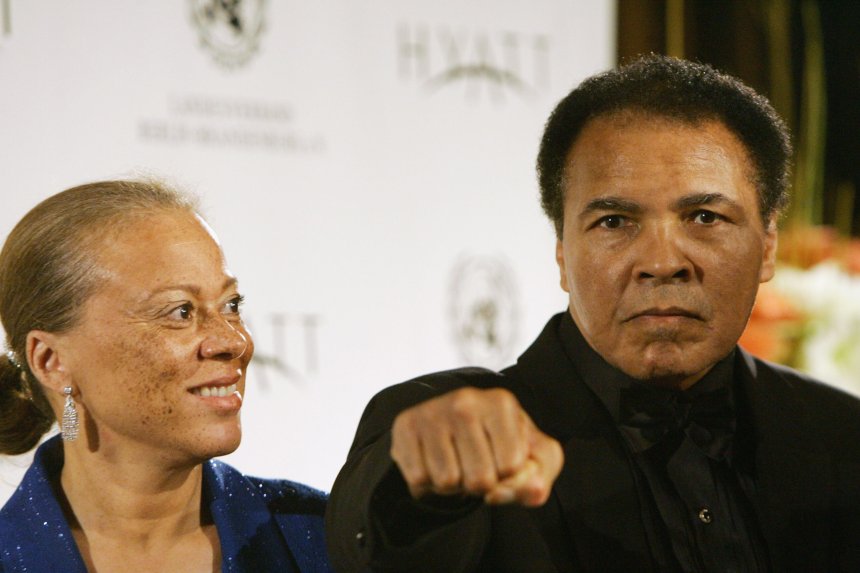
Ten years after the death of “The Greatest,” the Ali Center is leading the charge in a global effort to act with kindness, assist others, and more.
When Muhammad Ali spoke, people listened, not with an eagerness to respond for the sake of it, but with the glee and curiosity of what he might say next. A decade after his death, his wife, Lonnie Ali, and the team behind the Muhammad Ali Center hope that his actions and charity during his lifetime will resonate in the hearts and minds of thousands across the country.
On Wednesday, the Ali Center kicked off its inaugural Day of Compassion, urging municipalities across the country and the world to take time out to participate in acts of service. The Ali Center is even encouraging employees to take a paid day off to work and serve in the community.
“Compassion was the center point of Muhammad’s life,” Lonnie Ali, the late boxer’s wife, told theGrio in an exclusive interview. “It’s how he showed up every day, how he treated people with kindness, empathy, care, and respect. He never passed by a person he felt was in need; he did not stop to see that person and try to help them in some way. He always connected with people.”
The impact of Ali’s life, plus witnessing the nation’s current fractures, compelled Lonnie and the Ali Center to launch the Day of Compassion, with the aim of reconnecting people to their humanity and to the greater good of helping others rather than only helping themselves.
As she stood by his side from the mid-1980s until his passing on June 3, 2016, Lonnie was present for various acts by “The Greatest,” observing him and being aware of who in a room needed the most and whom he could gravitate toward to help. Even as one of the most famous people in the world, someone who was “extraordinary” according to Lonnie, Ali routinely found a way to remain true to himself.
“He was able to relate to people everywhere,” Lonnie says. “He never tried to solve the world’s problems, but he tried to help and uplift those people he saw, like in the moment. I think that’s what he tried to teach us. It doesn’t have to be some grandiose action that you do; it’s the little things that count.”
One of Ali’s biggest mantras, engraved on his tombstone, has become one of Lonnie’s favorite sayings, which she repeats often: “Service to others is the rent we pay for our room here on earth.” The Day of Compassion, in her eyes, is the greatest gift anyone could have given to the champion boxer and humanitarian.
Last year, the Ali Center launched a Compassion Index, examining 20 cities in the United States by identifying cultural and behavioral trends and establishing the Net Compassion Score. One finding was that many still believe in the “American Dream” and that compassion is a major component of it. Lonnie says the index will expand to include international cities in 2026, taking a deeper dive into what motivates people to be compassionate, what keeps them from being compassionate, and more.
In Ali’s native Louisville, he has never truly gone. The airport bears his name. Walls along buildings bear his visage through murals and more. When he entered the ring, he proudly represented the city, one that aims to be a “shining light” for what can be done in terms of giving back, being compassionate, and thinking of others. The Day of Compassion might originate in Louisville, but its reach is global.
As the Day of Compassion unfolds, Lonnie laughs when asked about her favorite memory of her late husband’s generosity.
“How much time you got?” she asks with a laugh, before recalling a moment when Ali woke up one morning and decided to visit children in the hospital, at a juvenile facility, or even men and women at a retirement facility. One day, when en route to a juvenile detention center in Los Angeles, a man down on his luck exchanged paths with Lonnie and Muhammad, unaware of who he was walking near.
“Muhammad noticed him, and we stopped,” Lonnie recalled. “He stopped about ten steps afterward and turned around and jogged back to this gentleman and tapped him on the shoulder, because he was still walking away. The guy turned around, looked up, and saw who it was, and, of course, his face lit up; he was happy, you know.”
She continued, “That probably would have been enough, but it wasn’t enough for Muhammad. Muhammad reached into his pocket, took every dollar he had, and put it in this guy’s hand. So, of course, this guy was elated, you know. And Muhammad came, turned around, started walking back to me, and he had this little skip, little smirk on his face. When he got to me, I said, ‘Muhammad, why did you do that? That gentleman didn’t ask you for anything.’ He said, ‘I know, but he looked like he needed it.'”
Acts like “gave Ali joy,” according to Lonnie, just for his ability to do it. Now that the Day of Compassion appears poised to become an annual tradition, she and others seeking to uphold her husband’s message hope to hear similar stories from others.
Share
What's Your Reaction?
 Like
0
Like
0
 Dislike
0
Dislike
0
 Love
0
Love
0
 Funny
0
Funny
0
 Angry
0
Angry
0
 Sad
0
Sad
0
 Wow
0
Wow
0