From first class to self-preservation: Why Gabriella Karefa-Johnson’s travel story struck a nerve
Black people have never been legally barred from flying, so why are they always shocked to see us in the


Black people have never been legally barred from flying, so why are they always shocked to see us in the air?
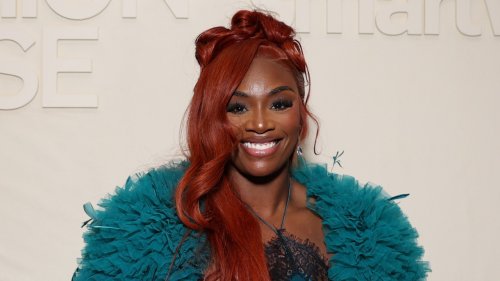
Gabriella Karefa-Johnson says she recently downgraded herself from first class to business class on a flight to Milan after what she described as “persistent micro-aggressions” and substandard service, and the moment has struck a chord far beyond her cabin.
In a post shared on Threads this week, the former Vogue editor, currently taking in Milan Fashion Week, detailed sitting in a six-seat first-class section where, she wrote, five passengers were white middle-aged men.
“Then there was me, a 30-something Black woman who travels in that cabin often,” she added, describing a male flight attendant who she says treated her differently from the moment she sat down. Rather than endure it, she moved.
“I would sacrifice physical comfort to protect my emotional and mental well-being any day,” she wrote. Though she later admitted the decision felt complicated.
“Protecting my peace felt like letting him win,” she said, calling it “such a bummer that humiliation is part of the gratification for racists.”
While her account is alleged, it’s resonating with so many because many Black travelers can attest she’s far from alone. In 2021, a group of 10 Black women went viral after documenting what they described as dismissive and microaggressive treatment while flying first class together. In 2022, Esquire published a report detailing how luxury air travel can feel isolating and racially charged for Black passengers, from skeptical glances to uneven service. In 2024, NPR reported something similar. And last year, reality television personality Porsha Williams was accused by a fellow flyer of hitting her during a dispute, again igniting conversation about bias in premium cabins.
While Black Americans have never been legally barred from commercial airplane cabins — unlike trains and buses that operated under explicit Jim Crow segregation — that legal access has not guaranteed equitable treatment. Airline travel has been federally regulated since the Civil Aeronautics Act of 1938, which prohibited racial discrimination by carriers. But Black travelers still experienced severe systemic bias and segregation in practice through the mid-20th century.
Today, airlines operate under federal anti-discrimination laws, and passengers who believe they’ve experienced bias can file complaints with the U.S. Department of Transportation, which requires airlines to respond. While formal protections exist, there’s still a need to regulate the culture. Presence still matters. The more Black travelers continue to occupy first-class cabins, executive lounges, and other historically exclusive spaces without apology, the less their presence can be treated like an anomaly.
But in the meantime, there is no single correct response to moments where your humanity is in question. Some people document. Some confront. Others, like Karefa-Johnson, choose to remove themselves, and protecting your peace is not a surrender to a battle you never agreed to in the first place.
Share
What's Your Reaction?
 Like
0
Like
0
 Dislike
0
Dislike
0
 Love
0
Love
0
 Funny
0
Funny
0
 Angry
0
Angry
0
 Sad
0
Sad
0
 Wow
0
Wow
0