Four Baltimore teens sue after AI gun detection system falsely identifies bag of chips as a weapon
Omnilert has faced backlash in several cities over the last year, including two notable false alerts in Baltimore. More than

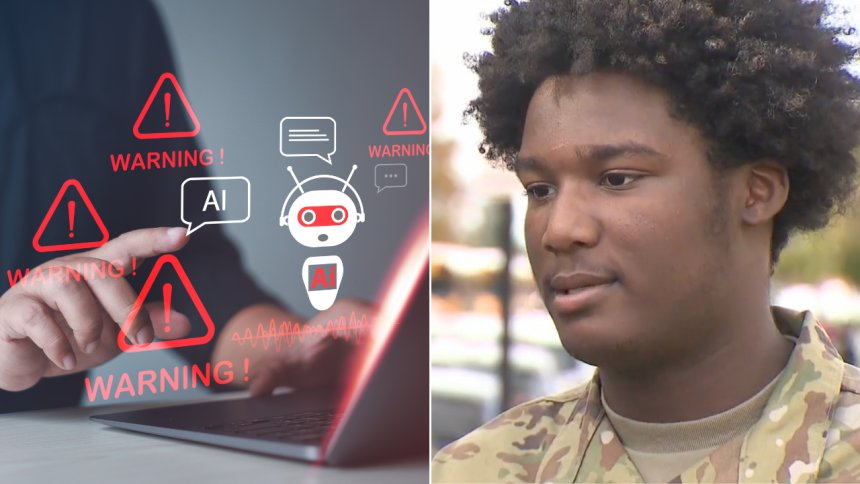

Omnilert has faced backlash in several cities over the last year, including two notable false alerts in Baltimore.
More than a year after they were mistakenly detained through the use of AI technology, four Baltimore teens are suing the maker of the technology, Baltimore County Public Schools and the Baltimore Police Department, along with the individual officers involved in their detainment.
Lawyers from the Lawyers’ Committee representing Taki Allen, Yui-Osa Ogebeide, Devon Thompson Jr. and Keith Winfield III are suing after Omnilert’s Gun Detect system, an AI-generated model used throughout Baltimore County Public Schools, mistakenly identified a bag of chips as a firearm at Kenwood High School in Baltimore County in October 2025. Armed police descended upon the school and the teenagers were ordered to their knees, handcuffed and searched, despite no wrongdoing.
“Nobody wants this to happen to their child. No one wants this to happen,” Allen’s grandfather, Lamont Davis, told reporters last October.
The false alert created a chain of failures, from school authorities to Omnilert itself. According to the suit, all parties involved were aware of the false alerts frequently created, as the system alerted the school there was a 90 percent chance of a gun being on campus, despite officials on the ground pointing out that a bag of chips was flagged and canceling the alert. Baltimore County Schools inked a four-year, $2.6 million contract with the company that expires in 2027.
Despite the alert being labeled a mistake, armed police still showed up on campus as officials, according to the lawsuit, do not have proper protocols in place to prevent police from showing up when an alert is canceled.
The 31-page complaint alleges violations of the teenagers’ federal and state Constitutional rights, negligence and gross negligence, and other violations by the defendants, including Omnilert, Baltimore County school officials, and Baltimore County Police Department officers.
“These students were failed not only by a technology that is prone to false alerts, but also by the very adults meant to keep them safe when we send them to school,” Damon Hewitt, president and executive director of the Lawyers’ Committee for Civil Rights Under Law, said in a statement. “Instead of this protection, they were met with guns and traumatized. And it could have been even worse.”
He continued, “Overreliance on artificial intelligence technology mixed with inept communication and coordination among key officials is a toxic mix. We need a reckoning on how AI is being used, especially concerning public safety and kids. We are fighting to deliver justice in this case, but it also holds lessons for educators and police officials across the country who should think twice before putting our children’s fate in the hands of AI.”
The incident was one of two notable false alerts in Baltimore schools last year. Weeks after the incident at Kenwood, an Omnilert alert led police to Parkville High School, where no weapon was found. The incident at Kenwood led Baltimore County superintendent Myriam Rogers to call for human verification before prompting a police presence.
Keith Winfield III’s mother, Frieda, who was on her way to the school to pick up her son and his friends, underscored the danger of AI technology’s flaws.
“The police told my son this could have been a real problem,” Winfield said. “No child in Baltimore County should face this kind of danger while waiting outside his own school for a ride home from his mother.”
Omnilert’s legal woes aren’t just in Baltimore. In May, a survivor of a 2025 school shooting in Tennessee sued the company for failure to detect the shooter’s gun.
Share
What's Your Reaction?
 Like
0
 Dislike
0
 Love
0
 Funny
0
 Angry
0
 Sad
0
 Wow
0