Experts break down why the BAFTA incident was more than ‘a moment’
Dr. Alfiee Breland-Noble and Tourette’s advocate Jamie Grace discuss the BAFTA slur incident, disability, race, and the politics of grace.

Dr. Alfiee Breland-Noble and Tourette’s advocate Jamie Grace discuss the BAFTA slur incident, disability, race, and the politics of grace.
Before we proceed, take a deep breath in and a deep breath out.
The events of this week (and if we’re being honest, this month, this past year) have been a lot, to say the least. And while Black social media users have mastered the art of balancing severity with satire during explosive pop-cultural moments, the truth is that moments like hearing a slur during the BAFTA Awards leave a mark. An impact on culture. An impact on the people in the room. And an impact on Black viewers, whether they witnessed it live or encountered it later while doomscrolling.
Others may dismiss the collective outrage as “dramatic” or “exaggerated.” But Dr. Alfiee Breland-Noble, pioneering psychologist, author, and founder of the mental health nonprofit The AAKOMA Project, offered theGrio language for the heavier weight these moments carry.
“The best way I can characterize that is racial trauma for Black people specifically,” she shared.
Across the diaspora, Black people have called out BAFTA and the BBC’s responses to the incident. And Black Americans, in particular, have sounded the alarm. “The issue is that for African Americans, that is an injury. It doesn’t matter what the origin or the whys of the injury are; it matters that it’s an injury. For us as Black people all over the diaspora, it doesn’t matter why it happened. It matters that it happened. That’s the outrage,” Dr. Breland-Noble added.

nonprofit The AAKOMA Project, and philanthropist via a 20 million dollar effort called The MATTIE Fund. (courtesy of Dr. Breland-Noble)
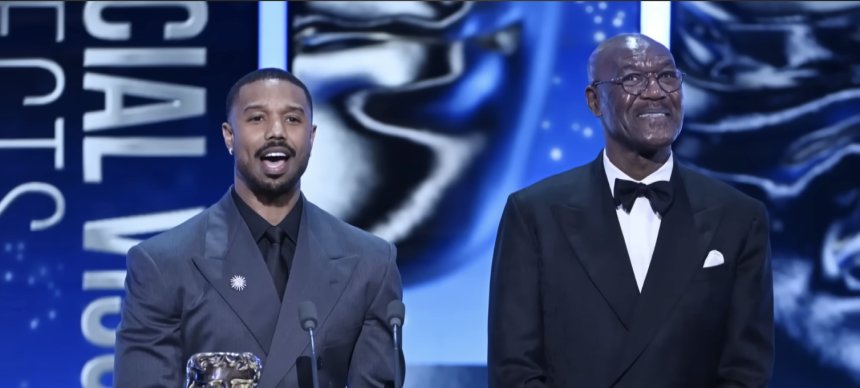
By now, you’ve likely seen or heard recountings of the moment that shifted the focus from the arts to accountability during the 2026 BAFTA ceremony. To summarize: while “SInners” stars Michael B. Jordan and Delroy Lindo took the stage to present an award, they were interrupted by a racial slur (the N-word) which was shouted from the audience by John Davidson, an attendee with Tourette’s syndrome—a neurological disorder that can cause sudden unwanted and uncontrolled rapid and repeated movements or vocal sounds called tics.
Since the shocking moment was heard in the broadcast of the pre-recorded ceremony, Lindo revealed that no one from the organization spoke to him or Jordan after the incident. Davidson, BAFTA, and the BBC issued various statements, mostly acknowledging the situation and, arguably, apologizing. However, during the time it took the organizations to address the situation, social media erupted with debates about accountability, Tourette’s syndrome, grace, and disabilities.
“Non-Black people, primarily—not solely—but primarily white people, they seem to fall in the discourse of, ‘well, you have to be understanding that it’s a disorder.’ The problem with that is they’re ignoring the harm and focusing solely on the person with the illness, right? But that person with the illness is not the person who was harmed in that instance; it’s the Black people,” Dr. Breland-Noble explained. “He has an illness, yes. But he caused trauma, so he has a responsibility to correct for the damage he’s done.”
She is not alone in that call for accountability. Tourette’s advocate and Grammy-nominated artist Jamie Grace echoed the need for reflection within the disability community.
“Wish there was more accountability from the disability community, even for the things that we can’t control,” Grace explained. “If I were to be placed on the side that has caused harm, I don’t think that this is the place to ask for acceptance and understanding. I don’t.”
“I think that that is a beautiful thing that is needed and necessary. But I think right now, there needs to be more accountability from the media team that could have prevented this from being shared, and more accountability from the disability community in how harm prevention should probably be a little bit higher on the list of priorities,” she continued.
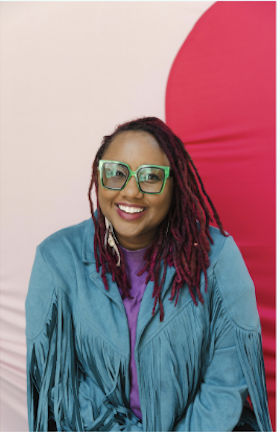
Diagnosed with Tourette’s Syndrome at 11, Grace, now 34, lives at the intersection of this conversation. As a Black girl growing up in the Tourette’s community, she recalls the discomfort of hearing white people’s tics involve racial slurs while also witnessing the discomfort from her peers when her physical tics inflicted involuntary harm to people. That duality, paired with the support of numerous resources, including therapy and her mother, forced her to understand the duality of life with a disability like Tourette’s.
“I really hope that for those of us in the disability community, you will choose to lean into the fact that our Tourette’s Syndrome, yeah, we can’t control everything that goes on, but we can be incredibly mindful of the situations that we put other people in,” she explained. “And that might be in sacrifices on our end, but we have a medical condition, not an excuse to be careless. They are not the same thing. We’re asking for accessibility, not an open door to cause harm.”
As Davidson, the BBC, and BAFTA continue to address the backlash, Dr. Breland-Noble underscores the psychological toll of moments like this. No one is naïve about the racism that continues to slither through society and its systems. But these public flashpoints compound what many already carry.
We often quote Michelle Obama’s “when they go low, we go high,” celebrating resilience as a virtue. Yet Dr. Breland-Noble points to Dr. Sherman James’ theory of John Henryism, the high-effort coping strategy in which Black people push themselves relentlessly to overcome systemic racism, often at the expense of their physical health. She connects that framework to weathering, the cumulative toll racism takes on the body, and to vicarious trauma—the psychological impact of witnessing harm.
“So John Henryism is our coping mechanism for many of us. Weathering is the stuff that impacts on our body, and vicarious trauma is our exposure to things. Even if we’re not the people standing on the stage at the BAFTA in England with the BBC, we still see it. So you put all those things together, there are these exponentially difficult, horribly detrimental impacts that [these moments] have on Black people.”
And still, we are expected to be “fine.” An expectation that the psychologist challenges in her upcoming book, “Rise and Thrive.” While we can’t change what happened, Dr. Breland-Noble shared three tools for navigating the weight of these moments.
“One of the things I say is you have to name something so that you can address something. That’s the first step. We have to give ourselves permission to say this was an injury. It was racial trauma. It triggered stuff in me. I’m angry about the fact that you all let this happen to these two men and the rest of that cast and all them Black people physically in that building,” she explained. “Give yourself space to name it, and don’t allow other people to take your naming away from you.”
Next, she says: “We have to be honest with ourselves and give ourselves the space and honor our own humanity in processing. For some of us, this won’t be with us six months from now. For other people, tomorrow, they’ll be over onto something else. All of that is okay.”
And finally, her reminder to Black communities is both tender and firm: “Don’t waste our time arguing with people who don’t get it. Stop it. You don’t owe them any explanation. It is taking ownership of ‘you’ve been injured.’ We’ve been injured. Those folks were injured on that stage. And we’re not going to argue with you all about why our saying that it’s an injury is justified. We’re not having—I’m not having—that discussion. So like we do on socials, block and delete.”
Share
What's Your Reaction?
 Like
0
Like
0
 Dislike
0
Dislike
0
 Love
0
Love
0
 Funny
0
Funny
0
 Angry
0
Angry
0
 Sad
0
Sad
0
 Wow
0
Wow
0




![Movie Trailer: ‘Search Party: Where’s PawPaw?’ [Starring Tichina Arnold & Tommy Davidson]](https://thatgrapejuice.net/wp-content/uploads/2026/09/search-party-wheres-paw-paw-tgj.jpg)