EXCLUSIVE: Mamdani says racial justice and Kalief Browder’s legacy at the center of Rikers closure plan
The mayor tells theGrio how his administration plans to reduce incarceration, address racial disparities in the city’s jail population and


The mayor tells theGrio how his administration plans to reduce incarceration, address racial disparities in the city’s jail population and finally fulfill the promise to close Rikers by 2032.
New York City Mayor Zohran Mamdani says he is “serious” about closing the notorious jail complex, Rikers Island, and that racial justice is at the center of his new strategic plan to make it happen.
“Improving conditions for New Yorkers in custody, as well as for correctional staff, is part of that same commitment to dignity and safety for Black New Yorkers,” Mamdani told theGrio ahead of the Friday unveiling of his strategic plan to shutdown Rikers by 2032.
Rikers, a 413-acre prison island in the Bronx, has long been ridiculed for its poor conditions and reputation for violence, physical and mental abuse, and neglect of its inmates.
In 2019, the New York City Council passed a bill that was signed into law by former Mayor Bill de Blasio that legally mandated the closure of Rikers by Aug. 31, 2027. However, delays that Mamdani says were caused by former Mayor Eric Adams have made that deadline impossible.
Mamdani’s new plan includes building four smaller borough-based jails beginning with Brooklyn in 2029, reducing the prison population by addressing pretrial detention and case delays, and other steps to modernize the Department of Correction and eventually reuse the island. 
The 35-year-old mayor also wants to create hundreds of therapeutic beds for New Yorkers with serious mental health conditions and complex medical needs. His administration is committing $146 million toward mental health care, substance abuse treatment, educational and vocational programming inside jails and in communities.
While Mamdani argues that closing down Rikers and reforming the city’s incarceration system is the humane thing to do, he also acknowledges that it’s also an issue of racial equity and justice for Black New Yorkers, who have faced disproportionate incarceration in the nation’s largest city.
“Black New Yorkers represent about 22% of our city’s population, and yet they make up about 56% of our city’s jail population,” Mamdani told theGrio.
He also pointed out that the city’s correctional staff is 65% Black, noting, “They deserve to go to work with dignity. They deserve to know that they’ll return home safely to their families when the workday ends.”
Mayor Mamdani said that in order to address the issue of Rikers and mass incarceration, it is important to tackle the “long-standing inequities” that created them.
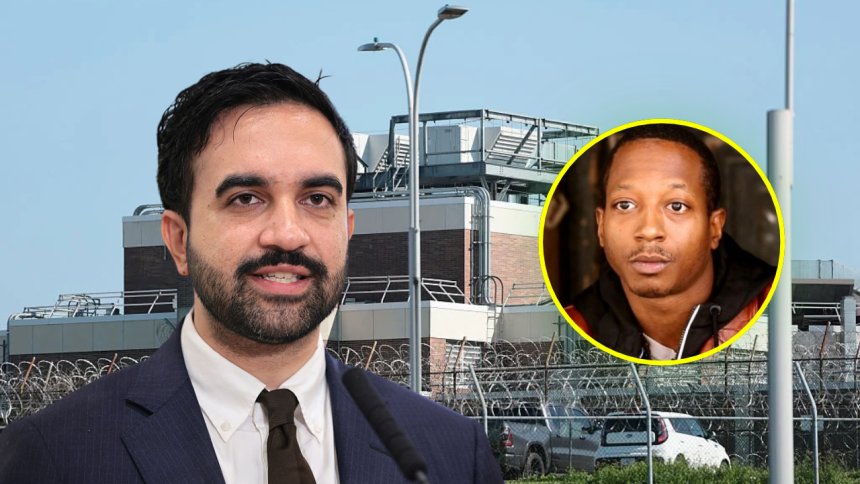
At the heart of Mamdani’s work is the memory and legacy of Kalief Browder, who was arrested at 16 after being accused of stealing a backpack in 2010. Browder, who spent 700 days in solitary confinement, spent three years at Rikers without ever facing trial because his family could not afford the $3,000 bail that was set for his release. While behind bars, Kalief faced violence and psychological trauma. 
Following several suicide attempts behind bars and eventually being released in 2013, Browder continued to suffer with depression. In 2015, he hanged himself to death outside his mother’s apartment at the age of 22.
“His life, his case, his legacy. It is one that informs so much of this plan,” Mayor Mamdani told theGrio. “There are many different legacies of his case that we are confronting.”
The Mamdani administration is investing $50 million annually for programs for people in custody and $76 million annually for programs that include supervised release, alternatives to incarceration, supportive housing, reentry, and faster case processing.
The mayor, who has personally visited the incarcerated at Rikers Island, including to watch the FIFA World Cup, told theGrio that he wants to “ensure that for any New Yorker who does not have to be incarcerated, that that’s not the path that they have to go down.”
In his first 11 months in office, Mayor Mamdani says his administration has shown “we are serious about the work of closing Rikers Island.”
He added, “We are serious about picking up the mantle that the prior administration had left mired in delays, and we are serious about being the first administration that can actually deliver on this.”
Share
What's Your Reaction?
 Like
0
 Dislike
0
 Love
0
 Funny
0
 Angry
0
 Sad
0
 Wow
0