Erika Alexander says Hollywood still has work to do when it comes to Black women and aging
The Living Single actress challenged Hollywood’s tendency to portray mature women as bitter, undesirable or past their romantic prime during

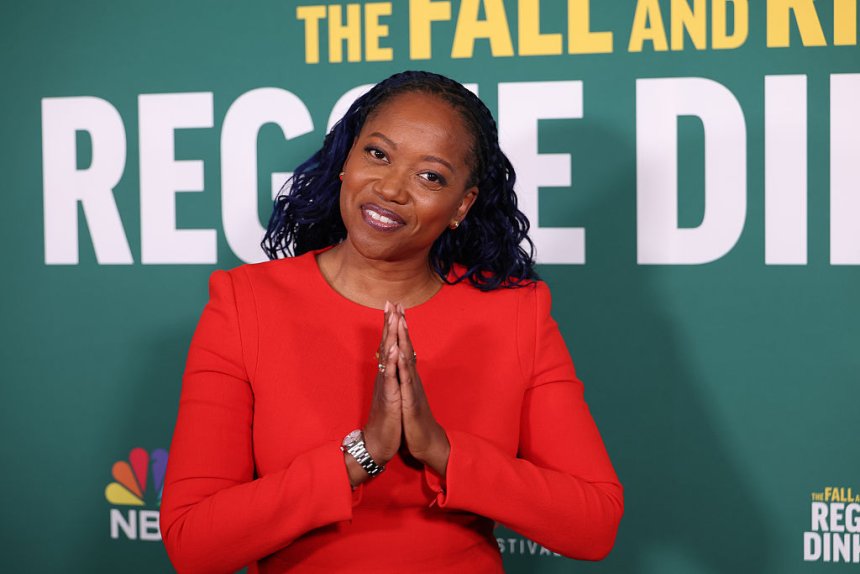

The Living Single actress challenged Hollywood’s tendency to portray mature women as bitter, undesirable or past their romantic prime during an appearance on “The Breakfast Club.”
Hollywood has no shortage of stories about women growing older. What it continues to lack, however, are stories that allow Black women to age without losing their desirability, romantic agency or complexity.
Actress Erika Alexander wants that to change.
During a November 20 appearance on “The Breakfast Club” alongside her “The Fall and Rise of Reggie Dinkins” co-star Precious Way, Alexander challenged the entertainment industry’s tendency to portray mature women as bitter, lonely or past their romantic prime. For Alexander, the problem isn’t simply that Hollywood struggles to cast older women in leading roles. It’s that the industry too often decides what their lives should look like once they reach a certain age.
“I think that people need to be encouraged to say that you can have another life. You can have love. You can have respect,” Alexander said. “But more importantly, you are sexy. You are desired. You know, you can be the object of desire past 35.”
The actress acknowledged that aging comes with physical changes, but questioned why those changes so frequently become the defining characteristic of older female characters. Rather than allowing women to experience the same romantic possibilities, vulnerability and sexual agency afforded to younger characters, Hollywood often defaults to familiar stereotypes.
“It’s easier to fall into the trap of Hollywood playing you as you old, and you’re just stern and you mad because you haven’t had any,” she explained. “The truth is, there’s plenty of people getting it.”
Alexander’s comments touch on a familiar frustration for Black actresses and audiences who have watched women become increasingly marginalized in romantic storylines as they get older. While male actors can continue playing romantic leads well into their later years, women are often expected to transition into supporting roles, particularly those centered on motherhood, mentorship or providing comic relief.
The double standard extends beyond casting. It also influences how audiences perceive Black women who age naturally, prompting conversations about their appearances that rarely receive the same scrutiny when male actors return to familiar roles decades later.
During the interview, the conversation turned to actress Jasmine Guy and the commentary surrounding her appearance following the premiere of Netflix’s “A Different World.” Alexander agreed with the hosts’ pushback against expectations that Guy should look exactly as she did more than three decades ago.
“They’re still the same golden child that’s in there,” Alexander said, emphasizing that physical changes do not erase a woman’s identity or diminish her value.
For Alexander, who spent five seasons playing attorney Maxine Shaw on “Living Single,” the conversation is particularly relevant to the legacy of Black women on television. Created by Yvette Lee Bowser, the Fox sitcom followed six Black friends navigating careers, friendships and relationships in Brooklyn from 1993 to 1998.
Maxine was ambitious, outspoken and unapologetically independent. She was also allowed to be romantically complicated. Her relationship with Kyle Barker (T.C. Carson) gave audiences a Black woman who could prioritize her career, challenge a romantic partner and still want love without sacrificing her independence.
That kind of complexity is precisely what Alexander believes mature women deserve, too.
The actress’s critique also comes amid broader questions about whether Hollywood has made meaningful progress in its treatment of women, particularly Black women, following years of public conversations about workplace misconduct, representation and accountability.
The industry has become more familiar with the language of inclusion, but Alexander’s remarks suggest that changing who gets cast is only part of the equation. The stories themselves must also evolve. More opportunities mean little if actresses are still expected to fit narrow ideas about how Black women should look, behave and experience love at different stages of their lives.
Black women do not stop being romantic leads, sexual beings or compelling protagonists when they reach a certain age. They continue to fall in love, reinvent themselves, pursue new experiences and discover different versions of who they are.
Share
What's Your Reaction?
 Like
0
 Dislike
0
 Love
0
 Funny
0
 Angry
0
 Sad
0
 Wow
0