Black leaders applaud Supreme Court ruling that takes blow to Trump’s attempt to restrict mail-in voting
“These rare victories should energize everyone to show up at the polls this November and vote, because if we do, we

“These rare victories should energize everyone to show up at the polls this November and vote, because if we do, we can and we will stop this tyrannical administration,” said NAACP President Derrick Johnson.
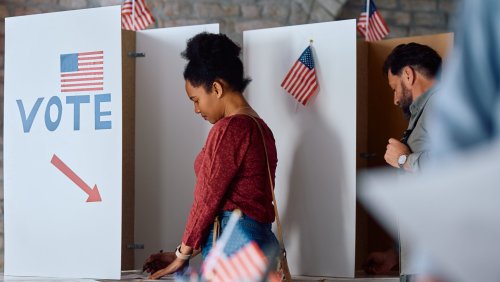
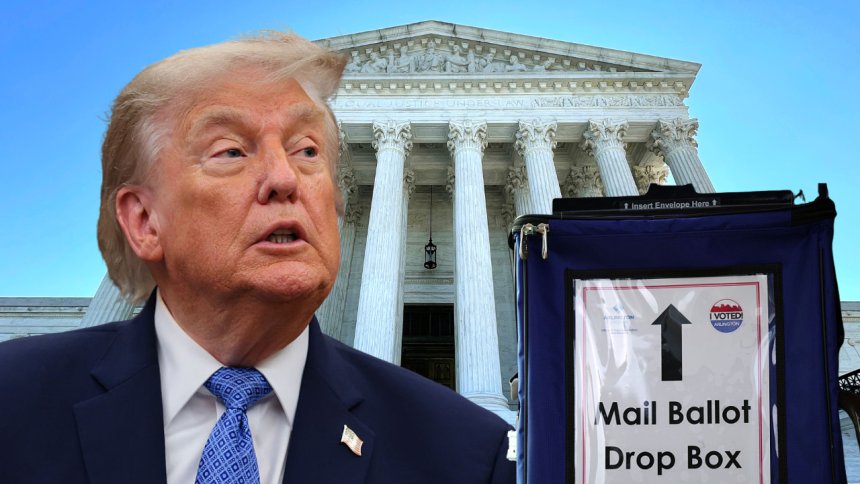
The U.S. Supreme Court on Monday dealt another major blow to President Donald Trump‘s attempt to severely restrict mail-in voting as he seeks to create a more favorable political outcome for Republicans ahead of the midterm elections on Nov. 3, and subsequently, have another two years to carry out his agenda.
Civil rights groups and Black leaders celebrated the court’s decision in Watson v. Republican National Committee, which upheld a Mississippi state law allowing mail-in ballots arriving up to five days after Election Day to be counted. The ruling also comes a week after a federal district court struck down Trump’s executive order directing the U.S. Postal Service to regulate mail-in voting.
“Good news rarely comes out of this Supreme Court, but today’s ruling is a win for our democracy,” said NAACP President Derrick Johnson, who said of Black voters, “Your vote still matters, otherwise, those in power like Donald Trump wouldn’t be trying so hard to silence you at every turn.”
The civil rights leader added, “These rare victories should energize everyone to show up at the polls this November and vote, because if we do, we can and we will stop this tyrannical administration.”
In their majority opinion, Chief Justice John Roberts and Justices Ketanji Brown Jackson, Elena Kagan, Sonia Sotomayor and Amy Coney Barrett write that while Congress sets a “nationally uniform deadline for voting,” mail-in voting is up to the states. If challenges like the RNC want to set limits on mail-in voting, they must do so through the Democratic process.
“When voting on different days in different States sparked allegations of fraud, Congress set a nationally uniform deadline for voting. If varied deadlines for ballot receipt similarly call for a national solution, the American people must choose it through their elected representatives,” says the majority opinion, authored by Justice Coney Barrett. 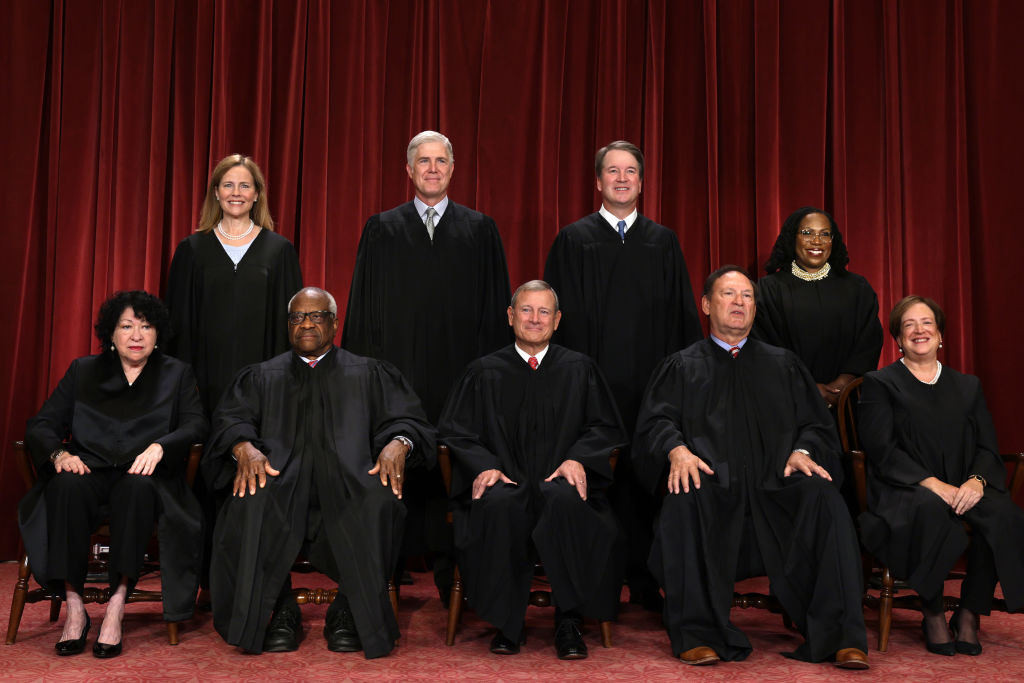
U.S. Rep. Hakeem Jeffries (D-N.Y.), the Democratic leader of the U.S. House of Representatives, who will likely become the speaker of the House should Democrats defeat Republicans in November, said the Supreme Court “did the right thing.”
He told reporters on Capitol Hill that the decision is “consistent with the United States Constitution,” which states that states have the authority to “manage the electoral process relative to voting by mail.”
Jeffries continued, “Voting by mail has never been a partisan issue until Donald Trump decided to peddle conspiracy theories related to his own failures to win back in 2020.”
President Trump has repeatedly falsely claimed that his 2020 defeat to Joe Biden in the presidential contest was a result of a rigged election. His campaign filed more than 60 lawsuits challenging vote counts in several states. Nearly all were lost or dropped.
Kristin Powell, executive director of Black Futures Lab, said of the Supreme Court’s decision, “As critical elections approach, we know that our democracy is strongest when it expands participation, not restricts it. For too long, Black communities and other historically marginalized voters have faced systemic barriers designed to silence our voices.”
Powell rejected the repeated claims by Trump and Republicans that there has been widespread voter fraud in relation to mail-in voting.
“What we have seen instead are coordinated attempts to undermine trust in our elections and restrict access to the ballot. Today’s ruling rejects that fear-driven agenda and affirms that our democracy must work for all of us,” she said. “Our vote has power. And when more of us are able to participate, our democracy becomes more representative, more responsive, and more just.”
While in the Oval Office, Trump slammed the Supreme Court ruling, said he a “little bit surprised” and told reporters, it “gives people more time to vote illegally.” The president urged the passing of the SAVE America Act, his signature bill that would require voters to provide a photo ID and proof of citizenship in order to vote. Trump notably refused to sign a bipartisan housing bill until Congress voted on the SAVE Act, which does not have enough votes to pass. 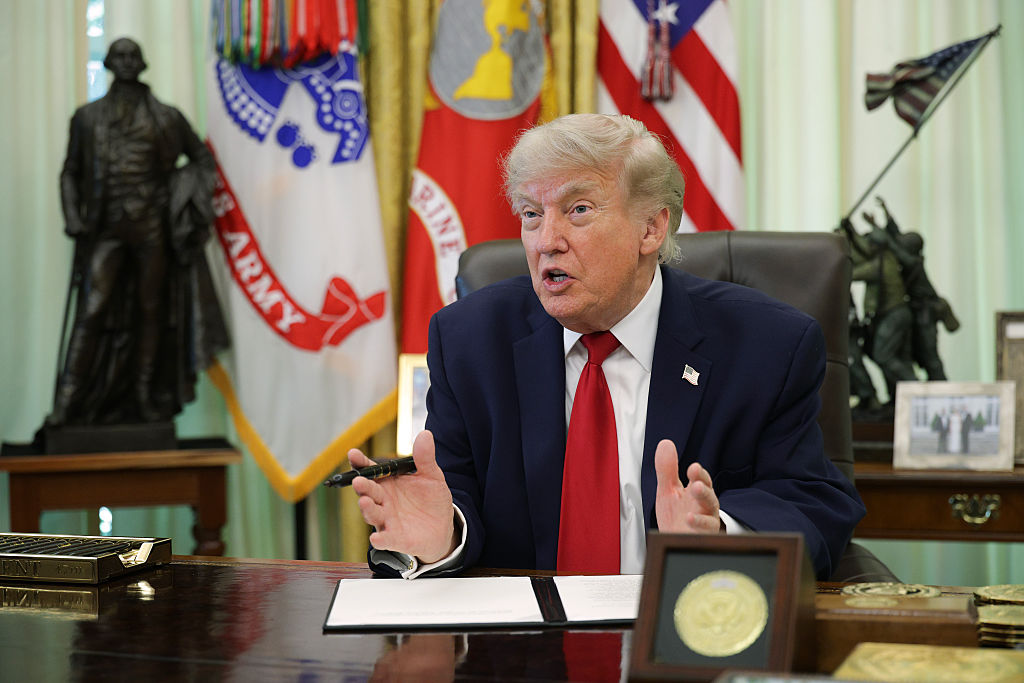
Maya Wiley, president and CEO of The Leadership Conference on Civil and Human Rights, emphasized the value of mail-in voting, saying in a statement, “Mail-in voting helps the elderly, people with disabilities, our servicemembers, and many others to vote. It helps every voter who cannot wait in long lines, including working people trying to make ends meet who cannot leave their jobs to vote on Election Day.”
Wiley, a civil rights attorney and former New York City mayoral candidate, continued, “It is one of the best tools we have to support voters and encourage active participation in our democracy. Today is a win in the fight for a multi-racial, just, fair, and equally representative democracy.”
The civil rights leader said more voters engaging in voting, not less, is necessary now more than ever following the Supreme Court’s controversial decision in Louisiana v. Callais, which made it harder for Black voters to prove racial discrimination under the Voting Rights Act of 1965.
“We need voters to vote now more than ever given the blow dealt by the Roberts’ Court majority in its Callais decision, allowing maps that discriminate against people who are Black, Latino, Asian American, and Native American,” said Wiley. “For our democracy to work for all of us, it must include all of us, and we will not stop until it does.”
The Lawyers’ Committee for Civil Rights Under Law, which sued the Trump administration’s executive order on mail-in voting, filed an amicus brief in the Mississippi case decided the Supreme Court. The brief cited, “A study of the 2024 election found that, in 32 states, absentee voting accounted for approximately 31 percent of votes cast, with nearly 2 million Black voters, nearly 3 million Asian voters, and over 4 million Hispanic voters in those states relying on mail-in voting to participate in the election.”
Robert Weiner, the Voting Rights Project director of the Lawyers’ Committee for Civil Rights Under Law, said, “The states and territories that permit a limited grace period to all eligible voters include Alaska, California, the District of Columbia, Illinois, Maryland, Massachusetts, Mississippi, Nevada, New Jersey, New York, Oregon, Texas, Virginia, Washington, West Virginia, Puerto Rico, Guam, and the U.S. Virgin Islands.”
He added, “There are 29 states that accept some military and overseas ballots received after Election Day.”
Share
What's Your Reaction?
 Like
0
Like
0
 Dislike
0
Dislike
0
 Love
0
Love
0
 Funny
0
Funny
0
 Angry
0
Angry
0
 Sad
0
Sad
0
 Wow
0
Wow
0