As DEI backpedaling continues, Solidcore CEO wants it to be the ‘de facto landing spot for Black women’
Since he began leading the company in 2021, Bryan Myers has proven the business sense of leaning into a diverse

Since he began leading the company in 2021, Bryan Myers has proven the business sense of leaning into a diverse clientele.
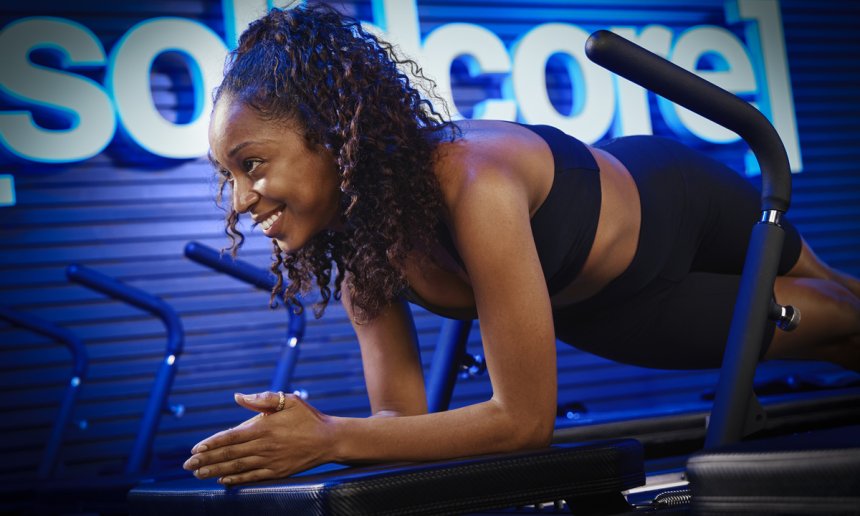
A few swipes down the fitness class corner of social media will show how much of a growing craze [solidcore] has become.
Avid members share updates of their 100th class or leveling up in difficulty level, but there’s something interesting about how this pilates-adjacent workout has taken over. This boutique fitness studio once synonymous with petite white women has become one of many case studies that prove how critical diversity is for business.
Since Bryan Myers stepped up as the brand’s Chief Executive Officer in 2021, [solidcore]’s nationwide presence has grown exponentially. There are currently over 160 studios in the United States and the company plans on doubling its footprint by 2028.
There are a few reasons for that. For one, Myers isn’t just a suit. Before the North Carolina native became this ship’s commander, he was a client looking for a good strength-based workout outside of a traditional gym. He found that in the reformer-based class that uses tension springs to adjust work load.
“It made me feel athletic without doing the gym bro stuff that I felt like I had to do,” Myers said. “You’re working your muscles to failure in an environment that just felt more welcoming and that ultimately really centered this idea of strength. When I was working out, I didn’t want to feel like, ‘Oh, if I didn’t look a certain way, or if I didn’t have a certain body type or body size, that like I wasn’t going to feel like I was welcome in a space because the workout centers strength at its core.”
As fate would have it, he landed the job as Chief Operating Officer at [solidcore] in 2018 and decided to take his training to the next level and become a coach. It makes sense how Myers, who still coaches classes today, has been able to take the business to new heights. As companies have retreated from diversity, equity and inclusion practices since the start of the latest Trump administration, Myers stood 10 toes down on ensuring Solidcore remained a welcoming space. On Glassdoor, the company has an equality, diversity and inclusion rating of 4.6 out of 5 stars, based on 161 anonymous employee ratings, “27.4% higher than the average rating for other companies in the personal consumer services sector.”
“The way to be ‘in’ at [solidcore] is actually not to show up in a Lululemon matching set,” Myers explained. “The way to be ‘in’ is not to be the thinnest person in the room. The way to be ‘in’ and the thing that we celebrate publicly is the work that you put in. With that basis, it allows us to say we are going to go out and find those people who typically have not been included in boutique fitness, particularly not in reformer pilates, and say, if you are willing to do the work, you are exactly who we want under the blue lights.”
The CEO spoke with theGrio about his mission to make [solidcore] the go-to boutique fitness studio for all bodies. 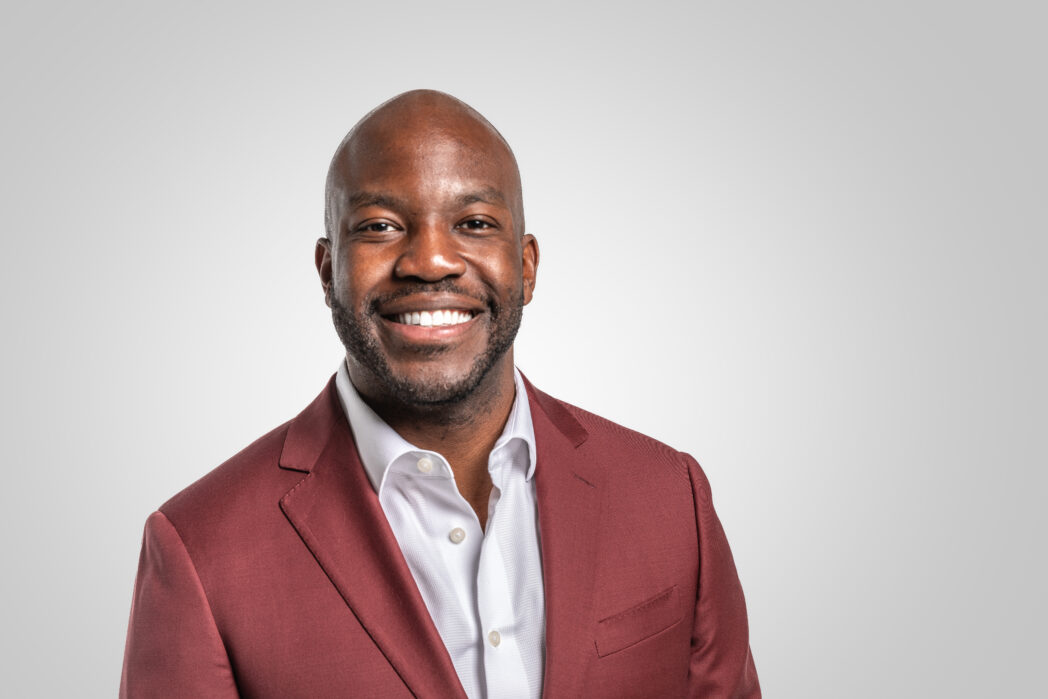
theGrio: When you look at many companies, CEOs haven’t actually done the work that their employees have done. What made you start coach training despite that not being a written requirement?
Myers: I’ve been with the business for over eight years. I started as chief COO and I immediately went through coach training because I was like, I can’t work in a place and not really deeply understand the front line, what it feels like to do the job that the vast majority of people here do. So I went through coach training, candidly, not even thinking I would ever really coach. I was just like, I gotta understand the job. And I ended up actually enjoying it and being decent at it. And so I now still coach. I do it a lot when I travel, as a way to just connect with our team in a really authentic way, and also to connect with clients and hear the feedback on the ground and see the product in action.
I kind of want to take your class and see what it’s about.
I always tell people, my class is chaos. But you’re gonna have a good time in my class. The music is gonna be lit.
What kind of music?
It’s honestly very eclectic. It’s all over the place. You’re definitely gonna hear hip hop because that’s what I like to work out to. You’re definitely gonna hear pop, but every once in a while I will throw in something very random.
Like My Chemical Romance?
Paramore, yeah. It just depends on my mood and what I’m feeling. The number one compliment you can tell me after taking my class is actually not about the workout, it’s about the playlist.
You have the Solidcore faithfuls who are celebrating their 50th class, 100th class, etc. And then you have others who don’t go in these spaces because they’ve historically been left out of Lagree and pilates-adjacent workouts. At the same time, it feels like there’s recently been more visibility as tides turn in favor of more people with various bodies showing their journeys with Solidcore. What does it look like to overcome those challenges and preconceived notions to encourage more than just size 0 white women joining this community?
For me, it starts with representation and people seeing themselves in the people who work at Solidcore. That comes from a very personal place. Had my college colleague, who was a Black gay man, not invited me to Solidcore, I don’t know that I would have shown up. As we started talking about, how do we push deeper into this space of, sort of, inclusivity? To me, it was like we have to start with getting people on our team who look more like the broader population.
Convincing people that this is going to be a place where they can be themselves is hard because the people who came before us in the space didn’t always allow that. The other thing that is hard as we step more into this space, we still have a business to run. A lot of times when people go down the inclusivity path with me, the first thing they say is, you got to lower your price point. And I’m like, I have investors, I have returns that I have to meet. Price point is one way to increase inclusivity, but there are also tons of people of color who can actually afford the price point, but who feel excluded for other reasons. So let’s start with continuing to build a really healthy business and figure out the other ways that we can create a more inclusive environment. And ultimately, down the road, if we can figure out how to bring the price point down, we will absolutely do that. But people have expectations, particularly for me as a CEO who is Black, of how we show up in the community, and that often creates some challenges.
We are in 2026, coming off of a year in which we saw companies backpedal on the commitments they made in 2020 to be more inclusive. I think that it’s really crucial that we do see a Black, queer CEO who is making sure that this is a part of the overt branding and messaging around a fitness boutique. Can you talk about not only why being an inclusive space is good business practice, but also, the responsibility you may feel to uphold DEI?
And I think the reason that people are backpedaling on DEI is because it was never rooted and aligned with building a great business. It was “we need to do this for PR reasons.” At the core for me, this is actually not marketing. This is a business strategy. When people think about what reformer brand is the de facto landing spot for Black women, I want it to be Solidcore. When queer people think about what space they want to be in to do a reformer-based workout, I want them to think about Solidcore. When people in larger bodies go like, ‘in what space am I going to feel comfortable on a reformer?’ I want them to think Solidcore reformer is actually larger than most other reformers out there, so I actually feel comfortable when I’m on that machine.
I feel deeply that you can build a business that is anchored in these values, where it’s not lip service, and still have the strongest business in the industry. There’s this underlying belief that we have to sacrifice our profitability in order to do DEI. The weight of the responsibility that I feel as a leader, is to show others that you don’t have to pick a lane. You can actually do both profitable business and prioritize inclusivity. And candidly, when you pick the lane that brings more people into your business in a way that’s authentic, it helps you be successful on the business side.
What does empowerment in fitness mean to you today?
To me, empowerment in fitness means that you get to show up as authentically you to achieve the objectives and the dreams that you have — that you are not walking in feeling like you have to achieve somebody else’s dreams, or you have to attain somebody else’s body shape, body size, whatever. But that whatever you came in the room searching for, you can find that and the people around you are helping you to get that.
And to me, that’s the beauty of this workout and this community. When people talk about what they want to achieve and the things that Solidcore has helped them achieve, they’re, of course, the physical things, but it’s also I actually just want to create time for myself where I feel like I’m giving back to the person who was forced to give so much to other people around me. It’s like all of those things that ultimately make people feel empowered.
Share
What's Your Reaction?
 Like
0
Like
0
 Dislike
0
Dislike
0
 Love
0
Love
0
 Funny
0
Funny
0
 Angry
0
Angry
0
 Sad
0
Sad
0
 Wow
0
Wow
0