America wants the World Cup but not the world
Listen to this story Loading the Elevenlabs Text to Speech AudioNative Player… In less than 100 days, the most profitable month in global sports history arrives on American terrain. In less than 100 days, North America will host the world’s biggest party. And in less than 100 days, the conversations — and the complexities — [...]


Listen to this story
In less than 100 days, the most profitable month in global sports history arrives on American terrain. In less than 100 days, North America will host the world’s biggest party. And in less than 100 days, the conversations — and the complexities — surrounding the 2026 FIFA World Cup will intensify.
Expected to generate north of $10 billion, the international soccer pageant marks a collision of the world’s most popular sport, overt capitalism, and American mythmaking. Flags from all over the world will flood billion-dollar stadiums, while massive streaming and broadcast deals project them into homes, airports and bars across the globe.
Immigrant households and neighborhoods in the U.S. will swell with pride during a time when fear is omnipresent. Politicians from the White House on down will sing the praises of the rest of the planet visiting America in the midst of its 250th “birthday.”
Race and immigration won’t sit on the outskirts of the quadrennial extravaganza. They will shape it, both in the present and historically.
America yearns for the lucrative advertising boom that only the World Cup offers. America wants to use this summer as a prelude to its Olympic hosting duties in 2028. America wants the global game.
America’s red card is that it doesn’t want all the global people.
That’s the contradiction. America controls the show. It also controls who feels welcome.
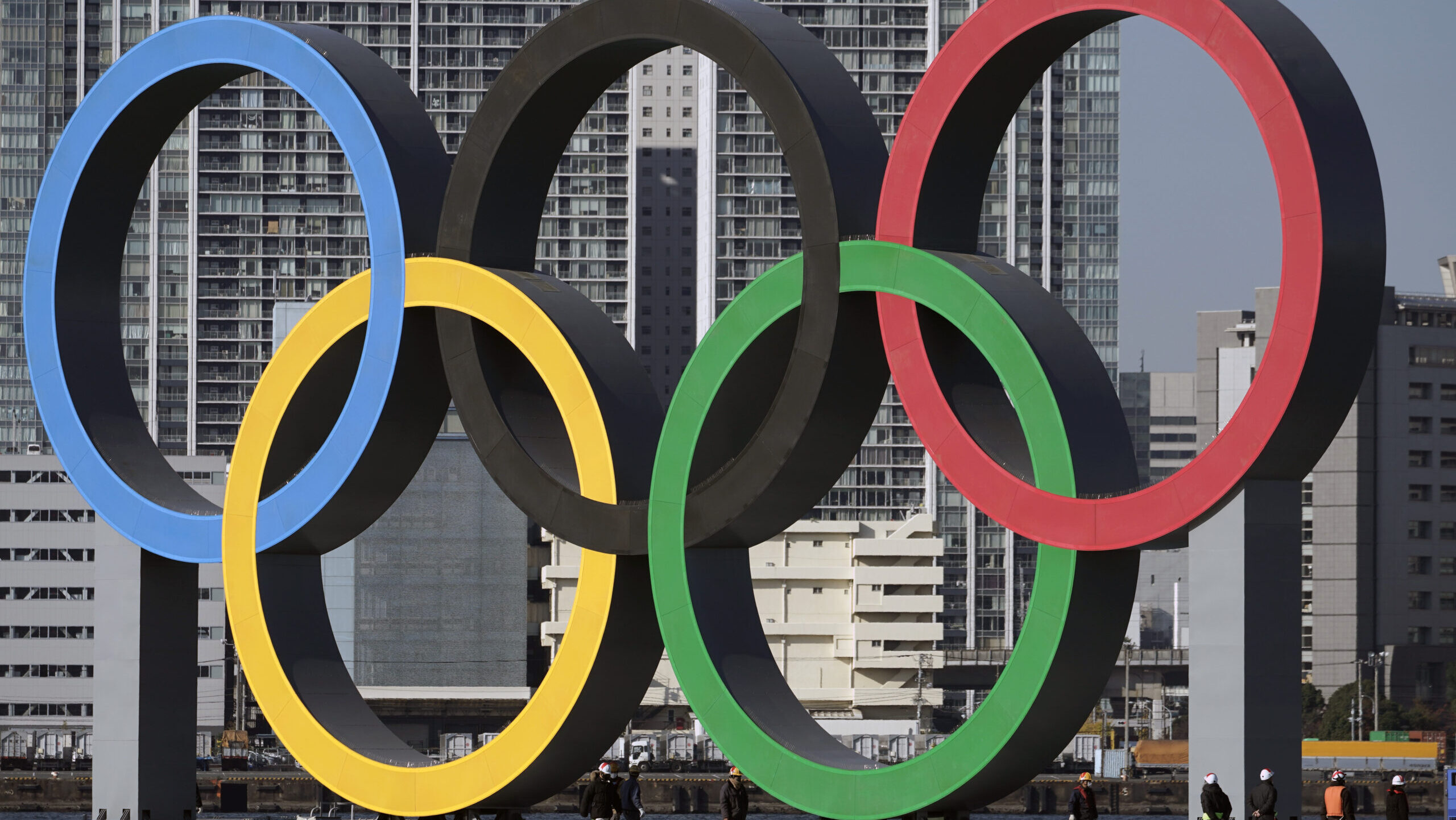
AP Photo/Aijaz Rahii, File

It’s not as if America suddenly became obsessed with soccer. The 1994 World Cup was paramount in establishing Major League Soccer (MLS) and the growth of the U.S. Soccer Foundation, both of which have been instrumental in cementing ties at the grassroots level beginning in youth leagues.
A 2025 report in The Economist revealed that soccer overtook baseball as America’s third-favorite sport, trailing only American football and basketball. Twenty years ago, the mere thought of that would’ve felt impossible. But it’s a credit to the game’s obvious international appeal and increasing accessibility.
Soccer in America is no longer a niche sport. It’s infrastructure.
America is banking on the diversity of many communities from across the world showing up in force this summer — though Canada and Mexico are sharing hosting duties with the United States, the bulk of the games, money, and spectacle will be held on continental U.S. soil.
The Mexican-American fans, West African enclaves, Asian and Arab diasporas, and more figure to make stadiums in the United States a melting pot. These won’t just be soccer matches on the highest stage. They’ll become cultural festivals with a soccer game riding shotgun. Not only that, the economic impact will be felt far beyond in-game experiences. Streaming numbers will balloon, as will jersey sales.
It’s an economic gold rush. The contradiction is visible beneath it.
Immigration in America remains a polarizing topic, regardless of what side of the aisle one sits on politically. The horror stories of families being separated, the impact it has on young children, and the potential ramifications of such psychological trauma are daily headlines. With critical midterm elections looming, border rhetoric will only grow more deafening on campaign trails.
In American cities such as Minneapolis, New York, Chicago and Los Angeles, the political tussle over ICE raids plays out daily. Student-led protests have become a norm. Deportation policies are increasingly framed through political talking points and campaign slogans instead of humanitarian nuance.
America faces a multitude of questions as the 2026 World Cup inches closer and closer. One of the most daunting, and one it might never directly address, is: How can a country celebrate flags in the stands while scrutinizing the passports required to wave them? It’s militarized borders operating in emotional concert with the biggest global sports celebration. It’s visa complications for fans from countries once disparaged by the sitting president — fans traveling here for nothing more than national pride expressed through soccer. It’s Mexican fans traveling north to watch matches on land that was once Mexico.
As it is every four years, the World Cup is not just a celebration of soccer. It’s a deeper critique of global capitalism and colonialism. For America, this summer, the World Cup is a branding exercise, soft power stunt, and tourism swell. It’s geopolitics through the artery of sport. But how can America justify hosting the world while preaching exclusion? How can America promote the World Cup when so many of its decisions seek to isolate parts of the same world?
The politics continue to intrude. On Wednesday, Iranian sports minister Ahmad Donyamali confirmed the country would no longer participate in the World Cup “under no circumstances.” The decision comes amid a war pitting Iran against the United States and Israel that has claimed the life of Iran’s Supreme Leader Ayatollah Ali Khamenei and caused the Strait of Hormuz to be shut off. The latter has already had rippling effects on the world’s oil and energy supplies. Tensions further intensified after a Feb. 28 U.S. Tomahawk missile mistakenly hit an Iranian elementary school, killing 175 people — most of them children. And on Thursday, FIFA Peace Prize winner and President Donald Trump posted on Truth Social that Iran remained invited to the World Cup but cautioned that traveling to the United States could present risks to “their life and safety.” The chain reaction illustrates how quickly the World Cup’s global spectacle can become entangled in international conflict.
It’s not about whether America can host a World Cup. Logistically speaking, of course, it can. It’s already proven it can with the aforementioned ‘94 Cup — one of the most successful in history. Yet, since the terrorist attacks of Sept. 11, 2001, America has treated global movement as a security threat before acknowledging it as a human right.
Sports as a sense of national pride is nothing new. Neither is the tension felt in America currently. What is undeniable, though, is that it’s far louder now, with a deeper sense of trepidation.
Patrick T. Fallon / AFP via Getty Images

The World Cup will live in stadiums peppered across North America. Its soul, however, will live in far more intimate settings. Think Dominican barbershops and salons in the Bronx. Or Mexican tailgates in Los Angeles and Chicago. Or watch parties in Houston, aka “Little Nigeria.” Or Salvadoran bars and restaurants in Washington, D.C.
Those communities don’t simply understand the contradiction. For those communities, the numbers aren’t abstract. It’s personal.
The World Cup will undoubtedly do a masterful job at selling a version of America that feels borderless, diverse, celebratory and accepting. America can be that. The politics tell a far different, exclusionary story.
When the world descends upon the United States this summer — and the nation profits accordingly — what does America owe the same cultures that made the tournament possible but don’t fit the current vision of making America “great?” Politics and bottom lines aside, at its core, the World Cup calls for the globe to gather. Strangers standing shoulder to shoulder should signal camaraderie. Choreographing unity for television while criminalizing it in real life is hypocrisy personified.
America wants the culture without proximity, the spectacle without the sacrifice, the flags while forgetting the families. Barring any massive shift, the world is coming anyway.
Now, the only question is whether it will feel welcomed or merely monetized.
The post America wants the World Cup but not the world appeared first on Andscape.
Share
What's Your Reaction?
 Like
0
Like
0
 Dislike
0
Dislike
0
 Love
0
Love
0
 Funny
0
Funny
0
 Angry
0
Angry
0
 Sad
0
Sad
0
 Wow
0
Wow
0