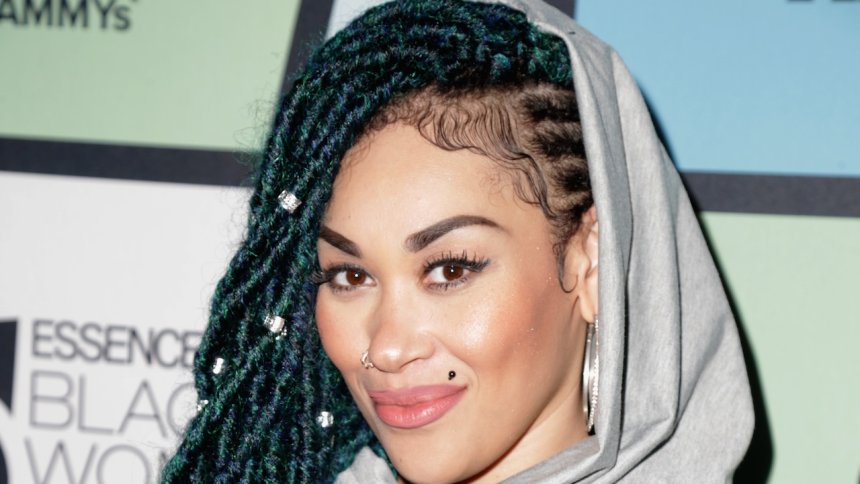
Aisha Tyler on why Black women need to prioritize self-care now more than ever: ‘You deserve to feel good’
In this exclusive interview, actress Aisha Tyler opens up about her family history with hypertension and how self-care is saving


In this exclusive interview, actress Aisha Tyler opens up about her family history with hypertension and how self-care is saving her life.
When Aisha Tyler’s father suffered a stroke roughly ten years ago, it shocked the actress. Up until then, as far as anyone else was concerned, he had been the picture of health. He maintained his fitness and led an active lifestyle, including dancing and more.
Despite that, he had a silent threat lurking undetected: hypertension, or high blood pressure, often dubbed the “silent killer.” Upon learning it was genetic and could impact her as well, the 55-year-old Emmy-winning star realized she needed to get serious about her health and self-care.
“Typically, people make these changes in reaction to a health event, rather than trying to prevent one,” the “Criminal Minds” alum told theGrio during a recent sitdown.
Those changes, she said, have looked like learning and understanding her blood pressure numbers, checking them regularly, managing her cholesterol, and paying closer attention to her diet.
“They weren’t difficult changes,” she continued. “The idea that the things I’m doing are taking care of future me made them very easy to do.”

She added, “And you know… it wasn’t like I went on a lawn cuttings diet. I check my blood pressure on a regular basis. I go to the doctor on a regular basis. I reduce my sodium intake. I really focus on sleep and stress reduction. And the nice thing is that all of those changes improve my life right away.”
Hypertension occurs when the force of blood pushing against the artery walls becomes too high, forcing the heart to work harder to pump blood, according to the Mayo Clinic. Left unmanaged, it can lead to serious complications, including heart attack, stroke, heart failure, kidney disease, and dementia — all things Black Americans face higher risks for developing. Meanwhile, Black Americans are also at an increased risk of developing hypertension. Nearly 58%, more than half, of Black Adults have high blood pressure according to the American Heart Association.
But high blood pressure can often be managed through lifestyle changes and medication. Catching it early is key. Beyond diet, exercise, and genetics, stress can also play a major role, something Black people and particularly Black women often experience disproportionately.
“I feel like for Black women specifically, we are so accustomed to being overburdened, overworked, overwhelmed,” the Archer voice actress said. “You get accustomed to feeling as if you have the weight of the world on you, and it’s our nature to be like, ‘I got it. I got this. No problem.’”
Tyler, who has held numerous roles in Hollywood as a TV host, voice actress, writer, and director—including co-hosting “The Talk” from 2011 to 2017 and becoming the first female host of “Whose Line Is It Anyway?” from 2013 to 2024—knows firsthand how demanding life can be.

Her advice to other Black women navigating similar pressures is simple.
“You deserve to feel good,” she said.
“You deserve to be healthy. You deserve to have some peace and some equanimity. We’re always lifting everybody else up. We’re always like, ‘I got it. I got this.’ But you can’t be of service to others if you are not first of service to yourself.”
She compared it to the instructions flight attendants give before takeoff about securing your own oxygen mask first.
“You need to feel good so that you can help others. You can lift others up. It starts with you, and that’s not selfish,” she said. “Self-care is just not a selfish thing.”
Self-care, she added, doesn’t have to be some overpriced and elaborate wellness ritual. While Tyler joked that others in her industry may be “wrapping themselves in seaweed,” her own routine is far simpler.
“The big change I made was that I really focus on getting like eight hours of sleep every night,” she said with a laugh. “That is just a very boring, very indulgent, and very good for you way to take care of your health.”
“When I get eight hours of sleep, every other part of my life works better. I’m going to perform better. My ideas are going to be better. My creative work is going to be better.”

More recently, she has also started intentionally carving out time each day to decompress. Sometimes that means attempting meditation, a practice her “hippie” mother has done since Tyler was a child growing up around the Bay Area of California, and one year spent in an ashram in Ethiopia while her parents studied meditation.
“I’m going to admit that I’m not very good at it,” she joked. “I can only do a few minutes at a time, but even taking those few minutes for myself each day has been really good for me.”
For others, she said, it could simply mean flipping through a few pages of a book or taking a few quiet minutes to do something solely for yourself.
Alongside her personal health journey, Tyler has also partnered with the CDC Foundation on its Hypertension Bites campaign, which encourages people to manage their blood pressure through small, manageable lifestyle changes.
“It doesn’t have to feel burdensome,” she said. “There are small changes that you can make, that you can start small, and these little adjustments are going to make a big difference in the quality of your life and the quality of your health.”
Share
What's Your Reaction?
 Like
0
Like
0
 Dislike
0
Dislike
0
 Love
0
Love
0
 Funny
0
Funny
0
 Angry
0
Angry
0
 Sad
0
Sad
0
 Wow
0
Wow
0