
55 Books Every Black Teen Should Read
Source: Richard Bailey / Getty UPDATED: 3:00 P.M. ET, July 22, 2026 There are few life skills more important than learning how to read. Reading opens the door to imagination, curiosity and lifelong learning. It introduces young people to new words and ideas, strengthens focus and concentration, and builds the critical thinking and problem-solving skills [...]


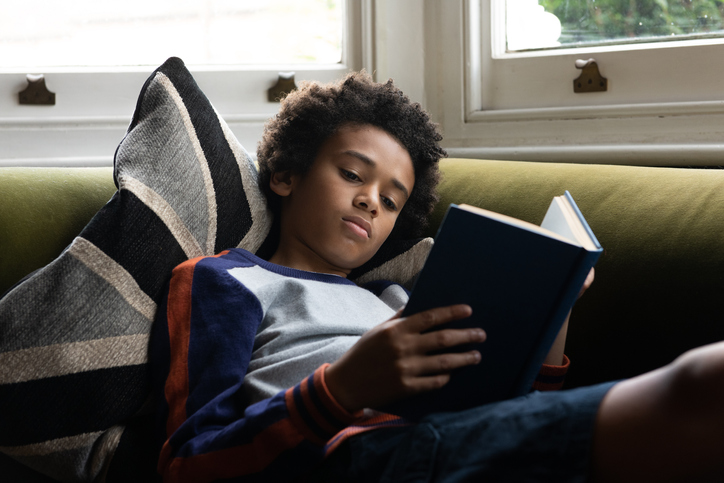
Source: Richard Bailey / Getty
UPDATED: 3:00 P.M. ET, July 22, 2026
There are few life skills more important than learning how to read. Reading opens the door to imagination, curiosity and lifelong learning. It introduces young people to new words and ideas, strengthens focus and concentration, and builds the critical thinking and problem-solving skills that help children succeed both inside and outside the classroom. Good reading habits formed early often lead to stronger communication skills, greater academic achievement and increased opportunities later in life.
Yet despite its importance, Black students continue to face significant literacy challenges rooted in decades of systemic inequities, including unequal school funding, fewer early childhood literacy resources and disparities in educational opportunities.
The numbers paint a troubling picture.
According to the National Assessment of Educational Progress’ (NAEP) 2022 report, only about 15% to 17% of Black fourth graders nationwide read at or above the “proficient” level, meaning more than 80% are reading at the “basic” or “below basic” levels. By eighth grade, proficiency rates remain largely unchanged, with only 15% to 18% of Black students reading at or above grade level, leaving roughly 82% to 85% without grade-level reading proficiency.
The National Center for Education Statistics has similarly found that Black students, on average, score lower on standardized reading assessments than their white and Asian peers, and while reading scores appeared to approve slightly in 2025, there’s still a big issue at hand: a persistent achievement gap that continues across grade levels.
But statistics only tell part of the story.
Black children absolutely read. What they have not always had is equal access to the resources and opportunities that foster strong literacy skills.
For generations, reading itself was a freedom denied to Black Americans. During slavery, it was illegal in many states to teach enslaved people how to read because literacy was viewed as a pathway to independence and resistance. Although those laws are long gone and books are more accessible today than ever before, the effects of those historic inequities continue to shape educational outcomes.
Reading is also one of the most powerful ways to expand perspective. Books expose readers to different cultures, experiences and ideas while encouraging creativity and empathy.
“If there is a book you really want to read but it hasn’t been written yet, then you must write it,” Toni Morrison once said.
Reading also helps develop stronger writers.
“Reading exposes us to other styles, other voices, other forms, and other genres of writing. Importantly, it exposes us to writing that’s better than our own and helps us to improve,” author Roz Morris said in an interview with the University of Rochester, according to Common Sense Media.
Unfortunately, reading for pleasure has steadily declined among young people across the country.
Research has found that the percentage of 13-year-olds who read for fun on a weekly basis dropped from 70% in 1984 to 53%. Among 17-year-olds, weekly reading declined from 64% to just 40%, while the share of teens who reported they rarely or never read nearly tripled—from 9% to 27%.
Those trends make encouraging Black youth to pick up a book more important than ever.
According to a 2015 report from the American Council on Education, more than one-third of Black or African American, Hispanic or Latino, and American Indian or Alaska Native 12th graders performed at the below-basic achievement level in reading, compared with roughly one in five White and Asian 12th graders.
At NewsOne, we believe the child who reads is the child who leads. Reading is about much more than passing a test, it’s about discovering new possibilities, finding your voice and seeing yourself reflected in stories that inspire, challenge and empower.
With that in mind, we asked our sister publications, HelloBeautiful and The Urban Daily, to share the books that left a lasting impact on them.
Here are 55 titles they believe every Black teen should read.
Share
What's Your Reaction?
 Like
0
Like
0
 Dislike
0
Dislike
0
 Love
0
Love
0
 Funny
0
Funny
0
 Angry
0
Angry
0
 Sad
0
Sad
0
 Wow
0
Wow
0






![2026 MTV Video Music Awards: Red Carpet Arrivals [Photos]](https://thatgrapejuice.net/wp-content/uploads/2026/09/vmas-2026-red-carpet-tgj-scaled.jpg)
